
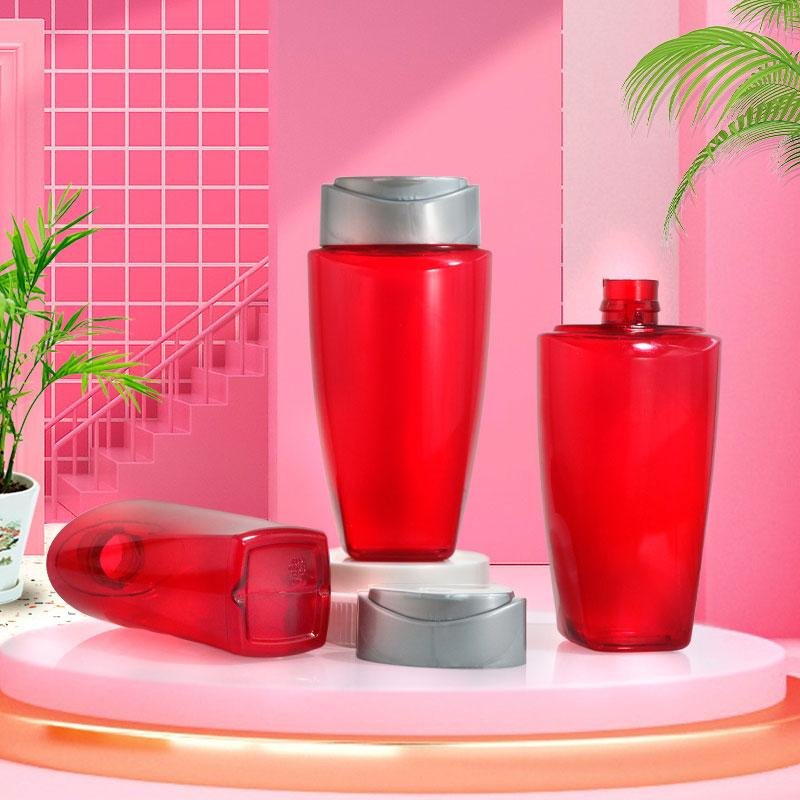
Glass bottles signal luxury and are chemically inert, but they typically weigh 5 to 10 times as much as an equivalent PET bottle and break in transit. PET and PETG plastic bottles cut weight, freight cost and breakage risk while still supporting premium decoration, which is why most mid-market and e-commerce cosmetic brands choose plastic.
Every brand wants packaging that looks expensive, protects the formula and arrives intact. Glass has long been the shorthand for premium, yet it brings weight, fragility and freight costs that can erase the margin on a mid-priced product. Modern PET, PETG and HDPE bottles now offer glass-like clarity, rich colour and high-end decoration at a fraction of the weight. This guide compares glass and plastic across cost, shipping, sustainability, product protection and shelf appeal so you can match the material to your brand.
Glass vs plastic at a glance
- Weight: a typical 100 ml glass cosmetic bottle weighs 110 to 200 g, while PET weighs 10 to 20 g.
- Freight: air and sea freight are roughly proportional to weight, so plastic can cut transport cost by half or more.
- Breakage: glass is brittle; plastic survives drops, vibration and parcel transit far better.
- ShiJin: 1,000+ molds, MOQ 5,000 units, 15-25 day production, PET/PETG/HDPE with premium decoration options.
How Do Unit Cost and Tooling Compare?
Glass bottles usually cost more per unit than plastic at the same capacity and decoration level. The material itself is heavier and more expensive, and secondary finishing such as frosting, screen printing or metallisation adds cost. Plastic starts lower on the unit price and tooling because injection-stretch blow molding runs faster and uses less material.
Tooling is another difference. A new glass mould is expensive and slow to change, while a PET or PETG blow mould can be cut and sampled more quickly. For a brand testing a new SKU or a limited launch, plastic keeps the upfront commitment smaller. Our PET vs HDPE vs PETG guide breaks down where each plastic resin sits on the cost-clarity spectrum.
However, glass holds value for ultra-premium lines where the weight in hand is part of the experience. The point is not that one material is always cheaper, but that the cheaper material is usually plastic unless the product itself justifies the glass premium.
Why Does Weight Drive Freight Cost?
Freight is priced largely by weight for both air and sea. A 100 ml glass bottle can weigh 110 to 200 grams, while an equivalent PET bottle is closer to 10 to 20 grams. If you ship 10,000 bottles, that is roughly 1.5 to 1.8 extra tonnes of cargo with glass, before you count the heavier carton needed to protect it.
The effect multiplies. Heavier cartons need stronger dividers and more void fill, which adds further weight and cube. For e-commerce, where a single parcel may contain only a few units, the customer also feels the postage cost. Our air vs sea freight guide shows how weight drives the landed price per unit across shipping modes.
Plastic does not just save money; it also lowers the carbon footprint of transport, because moving less mass burns less fuel. That matters for brands that publish sustainability metrics alongside their marketing.
Which Material Protects the Formula Better?
Glass is chemically inert. It does not react with essential oils, strong fragrances or aggressive actives, so it is the safe default for formulas that might stress plastic. It also blocks oxygen and moisture almost perfectly if the closure is good.
Plastic is not universally inert, but it is broadly compatible with most mainstream cosmetics. PET and PETG resist common surfactants, lotions and alcohols, and HDPE handles more aggressive contents. The key is to test, not assume. Our chemical compatibility guide explains how to match resin to formula, and the same rules apply whether the alternative is glass or another plastic.
Where plastic clearly wins is physical protection. Drops, knocks and vibration in a parcel network are far less likely to damage a PET bottle than a glass one. A broken glass bottle means total loss of product plus the risk of cutting the customer.
Is Glass or Plastic More Sustainable?
Glass is recyclable and can be recycled into new glass many times, but it is heavy, energy-intensive to melt and more likely to break before it reaches a recycling stream. Plastic is lighter to ship and uses less energy in production, yet it depends on collection and recycling infrastructure that varies by market.
PCR plastic narrows the gap. A PET bottle with 30 to 100 percent post-consumer recycled content lowers virgin demand while keeping the weight advantage. Refill systems also favour plastic because the refill pouch or bottle travels back and forth without breaking. Our mono-material design guide explains how to keep plastic packaging easy to recycle.
The honest answer is that sustainability depends on the full lifecycle: material source, transport distance, breakage rate, refill behaviour and end-of-life collection. Neither material wins by default.
Can Plastic Look as Premium as Glass?
Yes, with the right finish. PETG has a high-gloss, glass-like clarity and takes rich colours. Frosting, soft-touch coating and metallisation can push plastic into luxury territory. Many premium skincare lines now use PETG bottles that customers mistake for glass until they pick them up.
Decoration matters. A straight-walled PET bottle with crisp silk-screening and a weighted cap can feel more expensive than a plain glass bottle with a paper label. Our frosted vs glossy finish guide shows how surface treatment changes the perceived value of plastic.
The real trade-off is tactile weight. Some consumers associate heft with quality, and glass delivers that. If your brand story does not depend on weight, plastic can match or exceed glass on shelf appeal while saving cost and risk.
Frequently Asked Questions
Which is cheaper, glass or plastic cosmetic bottles?
Plastic bottles are usually cheaper per unit and in tooling because PET and PETG blow molding is faster and uses far less material. Glass wins only where the luxury perception justifies the higher material, freight and breakage cost.
How much heavier is glass than PET?
A typical 100 ml glass cosmetic bottle weighs 110 to 200 g, while an equivalent PET bottle weighs about 10 to 20 g. That is roughly 5 to 10 times the weight, which directly raises air and sea freight costs.
Is glass better for product protection?
Glass is chemically inert and a strong barrier to oxygen and moisture, so it suits aggressive actives and essential oils. PET, PETG and HDPE protect most mainstream cosmetics well and are far more resistant to drops and transit damage.
Which is more sustainable?
It depends on lifecycle. Glass is infinitely recyclable but heavy and energy-intensive to transport and melt. Plastic is lighter to ship and can use PCR content, but it depends on local recycling infrastructure. Neither wins by default.
Can plastic bottles look premium?
Yes. PETG offers glass-like clarity and rich colour, while frosting, soft-touch coatings, metallisation and quality closures can make plastic feel high-end. The main thing plastic cannot replicate is the heavy in-hand weight of glass.
Matching bottle options for this topic
Real molds from our library in a comparable material and size class — each product page carries the full spec sheet, neck size, MOQ and lead time.
- PET Cosmetic Bottle 177ml — SKU SJT0548-177
- PET Cosmetic Bottle 250ml — SKU SJT0017-250
- PET Cosmetic Bottle 500ml — SKU SJT0251-500
- PE Cosmetic Bottle 750ml — SKU SJE0038-750
Choosing between glass and plastic?
Send us your product, price point and shipping route. We run 1,000+ mold designs, MOQ 5,000 units and 15-25 day production in PET, PETG and HDPE, and we can show you side-by-side samples so you choose the material that fits your brand and budget.
Browse Mold Library Request a Quote