
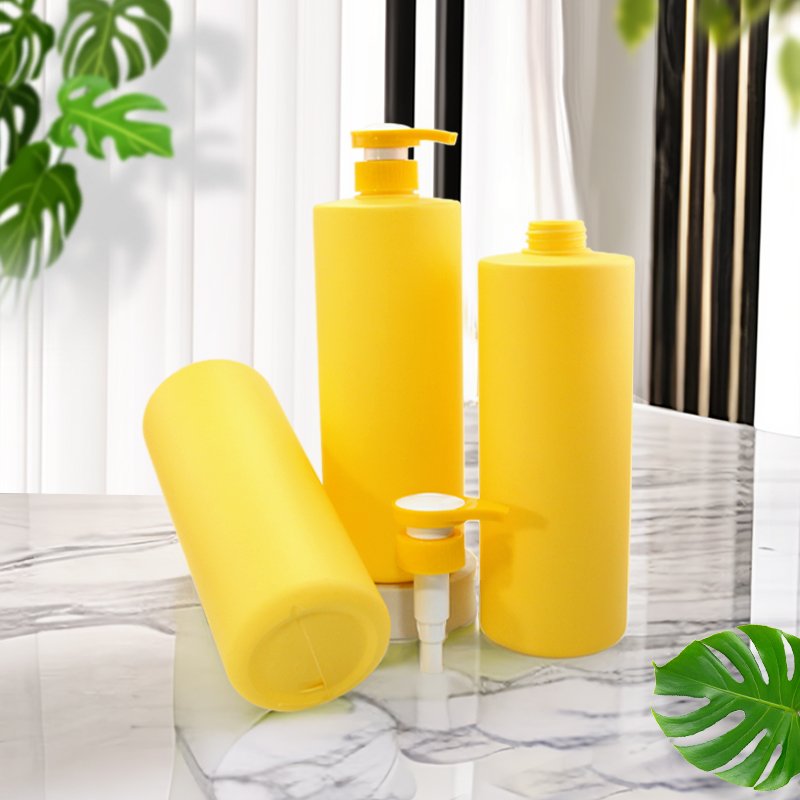
Importing cosmetic packaging from China follows a fixed order: write the spec, vet the supplier, approve samples, agree Incoterms and payment, inspect before shipment, then clear customs with correct documents. Plan 45–75 days from purchase order to warehouse for a sea shipment. The steps that protect you most are the two cheapest ones, the written spec and the pre-shipment inspection.
China supplies a large share of the world's cosmetic plastic packaging, and the sourcing path is well worn. What separates a smooth first import from a painful one is sequence and documentation, not luck. This guide walks the process in the order it actually happens, with the decisions and paperwork at each stage.
Import timeline at a glance
- Production: 15–25 days for open-mold bottles after sample approval and deposit.
- Sea transit: roughly 18–30 days port to port for North America, 30–40 days for Europe, plus port and inland handling.
- Typical payment: 30 percent deposit by T/T, 70 percent balance against pre-shipment inspection or bill of lading copy.
- HS code: plastic bottles, flasks and similar articles generally classify under HS 3923.30 — confirm with your broker.
- ShiJin: 1,000+ open molds, MOQ 5,000 units, FOB or EXW quotes, inspection reports before balance payment.
What Must Your Specification Sheet Contain?
Nothing else in the process works without this document. A verbal brief turns into a different bottle in every quote you receive, and you lose the ability to compare prices.
A workable spec sheet is one page and covers eight fields: capacity in millilitres, material, gram weight with tolerance, neck finish, closure type, color and finish, decoration method, and packing configuration. Add your target quantity and required delivery date at the top.
Write the neck finish in standard notation, such as 24/410 or 28/410, not as a diameter. A mismatch between bottle and pump neck is one of the most common and most expensive first-order mistakes, because it is only discovered at filling.
Include gram weight even if you are not sure of the right number. Ask the supplier to propose it, then lock it into the sheet after sample approval. Our wall thickness guide explains why that single number protects your unit price.
How Do You Tell a Real Factory From a Trading Company?
Both can serve you well. The difference matters because it changes who controls the tooling, the schedule and the quality response when something goes wrong.
Four checks separate them quickly. Ask for the business licence and check the registered scope for manufacturing. Ask which molding process they run in house, extrusion or injection stretch blow, and how many cavities. Request a video walk of the molding floor rather than photographs. Ask for the ISO 9001 certificate number and the audit body, then verify it.
Audit reports carry weight when they are recent. A BSCI or ISO 9001 report from the current or previous year, issued to the same legal entity that will sign your contract, is a genuine signal. A certificate in a different company name is not.
Ask one process question with a specific answer, such as how they control gram weight across cavities. Factories answer with a method. Intermediaries answer with reassurance.
Which Sample Stages Should You Insist On?
Three stages, in order. Skipping any of them moves risk downstream to the shipment, where it costs the most to fix.
| Stage | What it proves | Typical time |
|---|---|---|
| Stock sample | Shape, capacity and neck fit from an existing mold | 3–7 days |
| Color and decoration sample | Your exact color match, print position and finish | 7–12 days |
| Pre-production sample | Final bottle from the real production setup, with gram weight recorded | 7–15 days |
Do a compatibility check with your actual formula during the sample stage, not after. Fill several sample bottles, close them, and store at both room temperature and elevated temperature for several weeks. Look for weight loss, panelling, discoloration and any change in the closure seal.
Sign and date the approved pre-production sample and keep one unit yourself. That retained sample is your reference if a later shipment differs.
How Should You Structure Incoterms and Payment?
Incoterms decide where your responsibility begins. FOB is the common default for cosmetic packaging, because the supplier handles export clearance and delivery to the port while you control the ocean freight and your own broker.
EXW gives you the lowest quoted number and the most work, since you arrange collection from the factory door and export clearance. CIF looks convenient but hands freight choice to the supplier, and you inherit whatever carrier and schedule they pick. For a first order, FOB with your own freight forwarder is usually the balanced choice.
Payment for packaging is conventionally 30 percent deposit by bank transfer with the purchase order, and 70 percent balance before shipment. Tie the balance to a condition, not just a date. Payment against a passed inspection report or a bill of lading copy gives you leverage that a calendar date does not.
Keep tooling ownership explicit if you pay for a custom mold. State in writing who owns it, where it is stored, and what happens if you move production. Open-mold orders avoid this question entirely, which is one reason first orders often start there. See our MOQ 5,000 first-order guide for how to size that first run.
What Inspection and Documents Do You Need Before Shipment?
Inspect while the goods are still in China. Once a container leaves, your options narrow to a credit note on the next order.
Use a sampling plan rather than an opinion. ISO 2859-1 sampling with an AQL of 2.5 for major defects is a normal level for cosmetic packaging, and it gives both sides an agreed pass or fail rule. Specify the AQL in the purchase order, not in an email after production starts.
The inspection should cover dimensions against the drawing, gram weight against the approved sample, neck thread fit with your actual closure, color against the approved standard under a defined light source, print position and adhesion, leak testing, and carton count with drop testing on the outer carton.
Five documents travel with the shipment: commercial invoice, packing list, bill of lading or air waybill, certificate of origin where you claim preferential duty, and the inspection report. Check that the description and HS code on the invoice match what your broker will declare, because a mismatch is the most common cause of a customs hold.
What Applies at the Destination: Customs and Compliance?
Classification comes first. Plastic bottles, flasks and similar containers generally fall under HS heading 3923.30, but the exact national subheading and duty rate vary by country and change over time. Confirm both with your customs broker before you ship, never after.
Compliance obligations sit with the brand, not the bottle factory, so know what you must be able to prove. In the European Union, Regulation (EC) No 1223/2009 requires that packaging materials do not transfer substances to the cosmetic product in quantities that could harm health, and REACH governs the substances used. In the United States, the FDA regulates cosmetics and their containers under the Federal Food, Drug, and Cosmetic Act, and California Proposition 65 adds a state-level warning obligation.
Ask your supplier for a documentation pack rather than a claim. Useful items are the material grade and food-contact or cosmetic-contact statement for the resin, a declaration of the colorant and additive system, and a migration or compatibility test report if your formula is aggressive. Do not accept a certificate that names a standard your product does not fall under.
Plan the calendar backwards from your fill date. A realistic sea route is 15–25 days production, 3–7 days for inspection and booking, 18–40 days ocean transit depending on destination, then 3–10 days for clearance and inland delivery. Air freight compresses the transit to days but multiplies cost, and it makes thin-wall panelling more likely. Our export compliance guide goes deeper on the documentation side.
Frequently Asked Questions
How long does it take to import cosmetic packaging from China?
Budget 45 to 75 days from purchase order to your warehouse by sea. That covers 15-25 days of production after sample approval, 3-7 days for inspection and booking, 18-40 days ocean transit depending on destination, and 3-10 days for customs clearance and inland delivery. Air freight cuts transit to days at much higher cost.
What HS code applies to cosmetic plastic bottles?
Plastic bottles, flasks, carboys and similar articles generally classify under HS heading 3923.30. The national subheading and duty rate differ by country and change over time, so confirm the exact code and rate with your customs broker before shipping and make sure the invoice description matches the declaration.
What payment terms are normal for a first packaging order?
Thirty percent deposit by bank transfer with the purchase order and seventy percent balance before shipment is the common structure. Tie the balance to a passed pre-shipment inspection report or a bill of lading copy rather than a calendar date, so payment and quality confirmation move together.
Should I buy FOB, EXW or CIF for cosmetic packaging?
FOB is the balanced default for a first order. The supplier handles export clearance and delivery to the port while you control the ocean freight and your own broker. EXW gives the lowest quoted price but the most work. CIF is convenient but hands carrier and schedule choice to the supplier.
What should a pre-shipment inspection of cosmetic bottles cover?
Use ISO 2859-1 sampling with an agreed AQL, commonly 2.5 for major defects. Check dimensions against the drawing, gram weight against the approved sample, neck thread fit with your actual closure, color under a defined light source, print position and adhesion, leak testing, and carton count with outer carton drop testing.
Matching bottle options for this topic
Real molds from our library in a comparable material and size class — each product page carries the full spec sheet, neck size, MOQ and lead time.
- PE Cosmetic Bottle 200ml — SKU SJE0035-200
- PET Cosmetic Bottle 300ml — SKU SJT0509-300
- PET Cosmetic Bottle 500ml — SKU SJT0114-500
- PE Cosmetic Bottle 1000ml — SKU SJE1698-1000
Planning your first import from China?
Send us your capacity, closure and target quantity and we will return an FOB quote, a spec sheet draft and a realistic production plus transit calendar for your market.
Browse Mold Library Request a Quote