
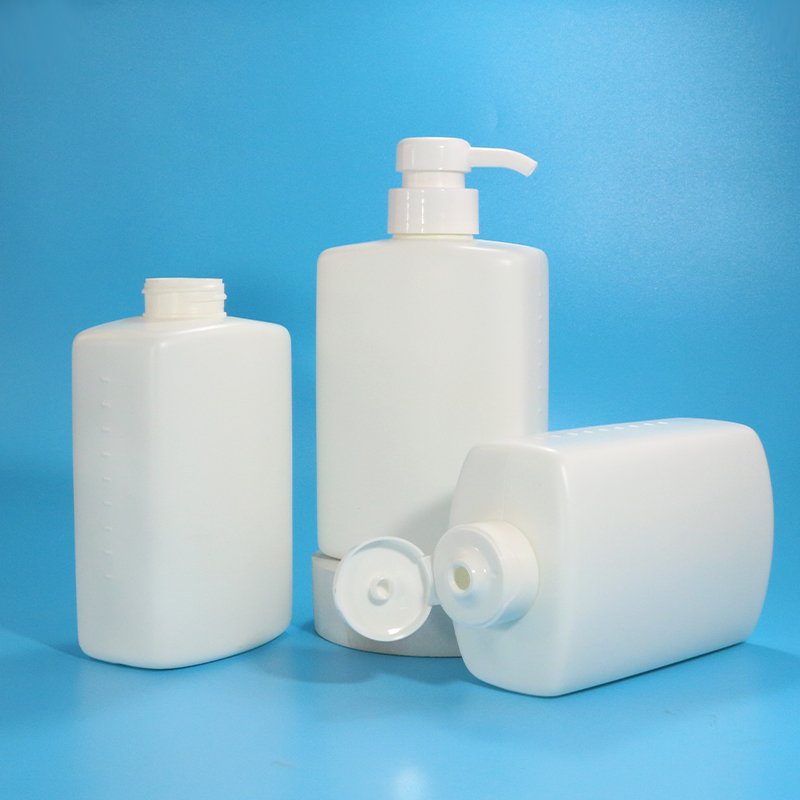
To calculate fill volume, measure the bottle's capacity at the fill line and subtract the headspace needed for thermal expansion, dispensing clearance and shipping shock. Headspace typically ranges from 5% to 10% of the nominal capacity for liquids, and up to 15% for products that foam or contain volatile solvents.
A 100 ml bottle rarely holds exactly 100 ml of product. The label claims 100 ml, but the bottle must leave room for the product to expand when it warms, for the pump to draw properly, and for the filling line to stop cleanly without foam overflow. Buyers who specify only nominal capacity often receive bottles that look too small or too empty once filled. This guide explains how to convert nominal capacity into a practical fill volume, how much headspace different formulas need, and what to write on the specification so the bottle, the filler and the label all agree.
Fill volume at a glance
- Nominal capacity: The total volume the bottle could hold if filled to the neck. It is not the same as the declared product volume on the label.
- Fill volume: The actual product amount dispensed or sold, measured at the fill line or label claim.
- Headspace: The empty volume between the product surface and the inner cap. It absorbs expansion, foam and pressure changes.
- Typical rule: Headspace equals 5-10% of fill volume for stable liquids, 10-15% for foamy or volatile products, and at least the pump dip-tube displacement for pump packs.
- ShiJin: 1,000+ open molds, MOQ 5,000 units, 15-25 day production. We can confirm capacity, fill line and headspace from a pre-production sample.
What Are Fill Volume, Capacity and Headspace?
Nominal capacity is the total internal volume of the bottle up to the point where overflow would occur, usually just below the start of the neck. It is the number most people mean when they say '100 ml bottle', but it is not the amount of product that should go inside.
Fill volume is the quantity of product the brand declares on the label and charges the consumer for. It is measured at a defined fill line that sits below the neck. Headspace, also called ullage, is the air gap between the product surface and the inside of the closed cap. It is not empty space wasted by the supplier; it is functional space that protects the pack.
Closure displacement matters too. A lotion pump or dropper assembly pushes a dip tube and cap liner into the bottle. When the cap is fitted, it displaces some volume. If the product is filled to the shoulder, the pump cannot be inserted without overflow. The fill volume must leave room for the closure as well as for expansion.
How Do You Calculate the Right Fill Volume?
Start from the label claim and work backwards. If the product must contain 100 ml by volume, the bottle's fill volume at the line should be at least 100 ml plus a small tolerance to avoid underfill. Most markets allow a small negative tolerance, but the target fill should be 100 ml plus the low side of that tolerance so the worst acceptable bottle still meets the claim.
Then add headspace. For a stable water-based lotion, headspace of 5-8% is usually enough. For a 100 ml fill, that means 5-8 ml of empty space above the product. The nominal bottle capacity must therefore be at least 108-110 ml to the shoulder. A 100 ml nominal bottle would be too small.
Account for the closure. A pump dip tube and actuator can displace 3-5 ml in a small bottle. A thick-walled jar lid displaces less, but a dropper bulb displaces more. Measure the displacement by fitting the closure to a bottle filled to the shoulder with water and collecting the overflow. Add that volume to the headspace budget.
How Much Headspace Does Each Formula Need?
The right headspace depends on the formula behaviour, not just the bottle size. Stable, non-foaming liquids such as oils, serums and thin lotions need the least headspace, typically 5-7% of the fill volume. They do not expand much and they do not foam when the bottle is shaken.
Foaming products such as cleansers, shampoos and mousses need more room, often 10-15%. Foam can expand rapidly during filling and shipping, and a pack with too little headspace will push product past the seal. Products with volatile solvents or alcohol also need generous headspace because vapour pressure rises with temperature.
Pump and spray packs need mechanical headspace in addition to thermal headspace. The pump must draw product without ingesting air, and the dip tube should sit a few millimetres above the base. If the product level drops too close to the tube inlet, the pump will sputter before the bottle is empty. Our lotion pump guide explains how tube length and fill height affect dispensing performance.
Where Should the Fill Line Sit?
The fill line is the visual target the filler uses to stop the dispense. It must sit below any shoulder transition so the product surface is flat and visible, and high enough that the consumer does not perceive the bottle as underfilled. A line that is too high leaves no headspace; a line that is too low looks cheap.
For transparent or translucent bottles, the fill line is often visible to the consumer, so it must align with the brand aesthetic. Some brands deliberately leave a larger headspace to make the product look premium; others fill higher to signal value. Either choice should be documented as a target fill height in millimetres from the base, not as a vague percentage.
For opaque bottles, the fill line is invisible to the consumer but critical for the filler. It is usually defined by volume with a statistical fill-height check. The specification should give both the target volume and the acceptable range, because volume is what the filler controls and height is what QC checks.
How Does Temperature Change the Calculation?
Most liquids expand when heated and contract when cooled. Water-based products expand by roughly 0.2% per 10 degrees Celsius near room temperature. Oils and alcohols can expand more. A bottle filled to the brim at 20 degrees may leak or dome at 40 degrees if the headspace is insufficient.
The shipping environment is the worst case, not the warehouse. A container on a sunny dock or a truck in summer can reach 50-60 degrees Celsius. The headspace must absorb the expansion from the coldest fill temperature to the hottest realistic transit temperature without stressing the closure or distorting the bottle.
Hot-filled products add a special case. The product is filled hot and then cools, creating a vacuum rather than pressure. The headspace must be large enough that the vacuum does not collapse thin walls or pull air past the seal. Hot-fill packs often need panelled sidewalls or base designs that flex inward under vacuum. Our cold fill vs hot fill guide covers the thermal cycle in more detail.
What Should You Put on the Specification?
Five numbers remove most fill-volume disputes. Put them on the bottle specification and share them with the filler.
- Nominal bottle capacity. Total volume to the shoulder or overflow point, in millilitres.
- Target fill volume. The product volume at the fill line, matching the label claim plus tolerance.
- Fill height range. Distance from the base to the product surface, with minimum and maximum limits.
- Minimum headspace. Empty volume above the product after capping, accounting for closure displacement.
- Temperature range. Fill temperature and the maximum expected storage/transport temperature for expansion checks.
At ShiJin we run 1,000+ open molds, MOQ from 5,000 units and 15-25 day production. We measure capacity, fill height and headspace on pre-production samples and sign them off against your specification before mass production starts. Our capacity tolerance guide explains how mould variation affects the numbers.
Frequently Asked Questions
What is the difference between nominal capacity and fill volume?
Nominal capacity is the total volume the bottle can hold to the overflow point. Fill volume is the actual amount of product filled to the fill line, which is what appears on the label. Fill volume is always less than nominal capacity because headspace and closure displacement take up room.
How much headspace should a cosmetic bottle have?
For stable liquids, 5-10% of the fill volume is typical. Foamy or volatile products need 10-15%. Pump packs also need enough headspace for the dip tube to draw without ingesting air.
Why does my bottle look underfilled even when the volume is correct?
The bottle shape may make the fill line sit lower in the visual field, or the shoulder may be taller than expected. Specify fill height from the base in millimetres, not just volume, so the visual level matches the brand expectation.
Does temperature affect fill volume?
Yes. Products expand when heated and contract when cooled. Headspace must absorb expansion from the fill temperature to the highest realistic transport temperature. Hot-fill products create vacuum during cooling and need packs that resist collapse.
Should the fill line be visible to the consumer?
Only for transparent or translucent bottles. For opaque packs, the fill line is a filler target and is checked by volume or internal height. Either way, document the target fill height and tolerance clearly.
Matching bottle options for this topic
Real molds from our library in a comparable material and size class — each product page carries the full spec sheet, neck size, MOQ and lead time.
- PE Cosmetic Bottle 49ml — SKU SJE0048-49
- PET Cosmetic Bottle 250ml — SKU SJT0464-250
- PE Cosmetic Bottle 420ml — SKU SJE1814-420
- PE Cosmetic Bottle 750ml — SKU SJE1763-750
Need a bottle sized around your fill volume?
Send us your target product volume, formula type and closure. We will recommend the right nominal capacity, fill line and headspace from our 1,000+ open molds, with MOQ from 5,000 units and 15-25 day lead times.
Browse Mold Library Request a Quote